Here's a list of social media websites and platforms that used to offer an unique experience but have since introduced a short video format becoming yet another TikTok clone, and also of platforms that have somehow resisted the TikTok-fication plague that has been running rampant on the web.
Video-Sharing Platforms
Youtube: once a platform mainly for long video format that didn't distinguish between video lengths, now obnoxiously promotes short videos called Youtube Shorts to the chagrin of its users, including shoving completely unrelated shorts in the middle of the search results page. Short videos are displayed in a different website design, and even videos uploaded before the change were affected by the update. Uploaders can neither opt out nor opt in to their videos being categorized as short videos, as the process is performed automatically.
The Resistance: Vimeo somehow resisted TikTok-fication so far, perhaps because it's more of a video host than a social media platform. Peertube has been largely unaffected mainly because nobody uses Peertube anyway, so there is no point in chasing trends. Twitch has remained largely unaffected since it's mainly a desktop streaming platform. Although it does allow users to stream from smartphones if they wish to do so, it seems most people have the decency of using the horizontal orientation for streaming instead of vertical, so Twitch's feed doesn't look get filled with tall shorts even in the IRL category. However, Twitch provides a feature to create short clips of streams and this feature can create tall videos meant to be syndicated to Youtube and TikTok as shorts, which means Twitch playing an active part in spreading TikTok-fication on the web.
Read on to learn how to create and manage clips, edit them for vertical formats, and share them to social media to promote and grow your channel.
https://help.twitch.tv/s/article/how-to-use-clips (accessed 2025-04-11)
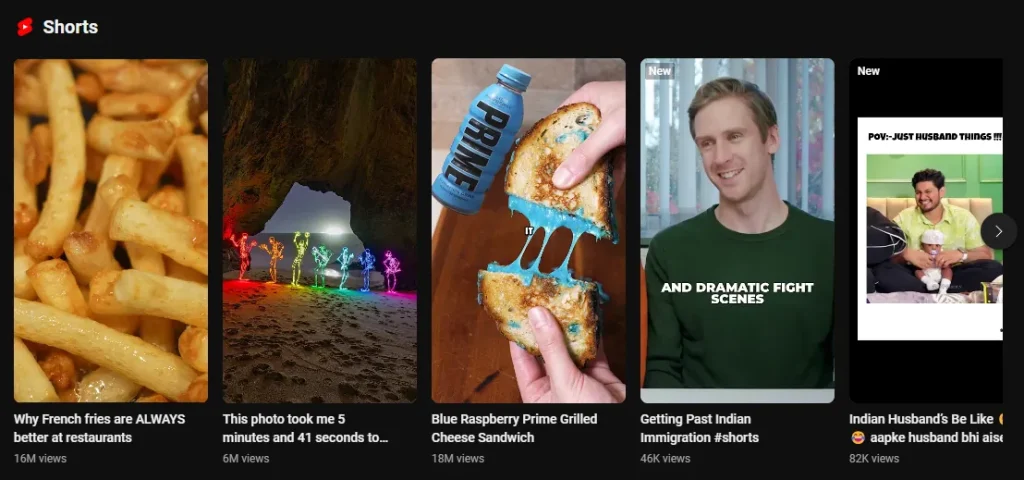
Image-Sharing Platforms
Platforms that were once filled with static images, be it beautiful photos or funny memes, that you could calmly browse or scroll through their thumbnails in a grid or masonry layout, are now filled with over-stimulating short videos seeking to rob you of your attention at all times, some of them having a literal wall of random animations playing simultaneously competing for the finite processing power of your brain.
Instagram: once a platform mainly for sharing photos, it has introduced a short video format called "reels," which its algorithm heavily promotes over any sort of photography or static image.
Imgur: once a platform to host images to post them on Reddit because Reddit allowed images, it became its own social media as users began posting on the platform, with many posts reaching hundreds of comments and thousands of upvotes on its homepage. As users posted clips of their favorite shows as animated GIF's which was a terrible format for that, Imgur invented the GIF Video format that helped the GIF's legacy survive in the WebM era. This GIFV format was just mute video that looped automatically in the browser. Today, the masonry-style homepage of Imgur isn't filled with images, but with videos, and the videos have audio.
Pinterest: once a platform for sharing images you find on the Internet despised by everyone on the Internet that doesn't use Pinterest, has been partially TikTok-fied since allowing short videos to be uploaded. On the web, Pinterest will not play more than one video per screen in its large masonry layout filled with thumbnails. On its app for smartphones, however, the screen size is much smaller which means more videos are played.
Snapchat: I have never used this, personally. It seems it was once an app for sending pictures to people you know, but it quickly introduced the ability to post video in 2012, an algorithmic feed in 2017 (which was removed due to backslash), and in 2020 launched a TikTok clone called Spotlight1. Looking at the website, it just looks like a TikTok clone to me, a single column of tall short videos scrolling infinitely, without a single static image in sight.
The Resistance: Flickr, despite allowing video uploads, has somehow resisted TikTok-fication so far. DeviantArt has also resisted TikTok-fication, but unfortunately they have fallen victim of a different plague: AI.

Text-Based Platforms
Text-based platforms have a high degree of resistance to TikTok-fication since they must support short (attention span) videos' arch-enemy: text. Nevertheless, any platform that supports both text and image posts will eventually fall into the trap of supporting video posts, which will have to be short video posts since hosting long videos costs a lot more money, which inadvertently leads to many sections of the platform becoming infested with short videos.
Memes: memes, in general, have fallen victim of TikTok-fication. Memes used to be inside jokes, then became images with labels on them. Nowadays, many memes are literally just somebody's opinion written on top of a short video that is a clip from a popular movie. While this may sound innocuous at first, one must wonder: these are platforms that let you just post your opinions directly as text; why, then, do people feel the need of decorating their opinions with popular images and now with videos? Writing three paragraphs (also called "an essay" these days) on why "TikTok is bad" won't get you enough virtual accolades to satisfy your need for attention, so maybe if you wrote instead "bros on tiktok" labeling a random video that makes so little sense it's practically a visual non-sequitur it would get you the fake Internet points you crave so much for? I can't help but feel that it's something a lot more dangerous. People have opinions for complex reasons, but conclusions can be summarized. When you write text, you can elaborate why you believe what you believe and exposing that reasoning allows others to disagree with you even if they agree on your conclusion. This criticism can feel like a personal attack on your judgement, which may lead some to avoid opening up in writing. Meanwhile, if you post just the conclusion, everyone who shares the same conclusion will agree with you for different reasons. This is why saying "things are bad" is so popular on the Internet, specially through memes. Some may dislike TikTok for what content gets posted without caring for its cultural effects, while others may dislike it for the cultural effects without ever having actually used TikTok to see what gets posted in there. Both of these people will disagree with each other's reasoning but agree on the conclusion, so the conclusion will gets those likes, reblogs, retweets, upvotes, favorites, bookmarks, saves, etc. that the reasoning wouldn't. Personally, I don't even think that TikTok is bad. I think what's bad is that every single platform on the Internet is trying to become the exact same platform. Without differences, people who don't like TikTok can't migrate to a platform that is not TikTok, because now every platform is TikTok.
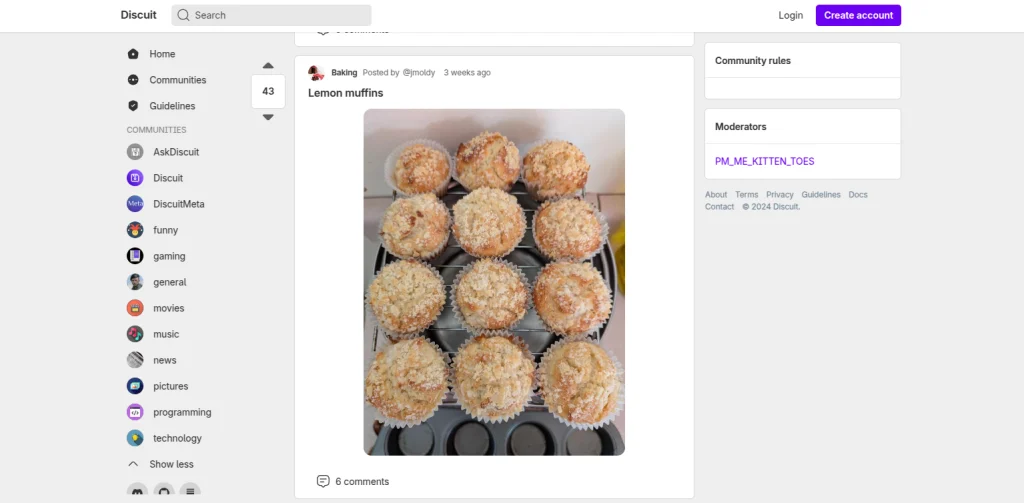
Reddit: once text-focused platform with a distinct link aggregator-style feed where users could discuss shared links with threaded comments, has since been redesigned to be less text-focused and more media focused, with its default feed format now identical to any random single-column social media website. After supporting the upload of images and then short videos, many subreddits started featuring reposts directly from TikTok or TikTok-fied Instagram reels.
Facebook: once a platform for keeping up to date with people you know, it's now filled with random funny short videos and reels coming from Instagram, its partner platform.
The Resistance: Tumblr has largely resisted TikTok-fication despite being a single-column format and allowing video posts, including from TikTok, to be shared. Presumably, this has occurred because Tumblr provides rich ways for users to express themselves in text posts and in image posts, including the ability to mix text, image collages, and video in a single post. Twitter and Twitter clones (Bluesky, Mastodon) don't have the same level of freedom of expression as Tumblr, imposing restrictions on text formatting, text length, and image layout, but they have somewhat resisted TikTok-fication because a lot of videos shared on them are short horizontal clips instead of short vertical clips. In particular, indie game developers targeting desktop often share trailers of their games on these platforms as short horizontal clips. Plurk has ironically resisted TikTok-fication despite having a horizontal feed which one imagines would be perfect for placing a long queue of vertical videos.
Note: it seems LinkedIn has also added short video content, but I can't find any on the website, so I can't tell how much its TikTok-fication has progressed.
References
- https://www.buycustomgeofilters.com/blog/snapchat-history-and-updated-timeline (accessed 2025-04-11) ↩︎