To make money with bitcoin, follow the following steps:
1: buy bitcoin for X dollars.
2: sell your bitcoin for more than X dollars.
That's it. That's all there is to it. The technobabble you heard about in an ad, or Youtube video, or from a celebrity or influencer peddling crypto does not matter.
That's because this is a scam.
Most People Will Lose Money With Crypto
Let's say you want to make 1 million dollars in crypto, you want to become a crypto millionaire. To do this, all you need to do is the following:
1: buy bitcoin for X dollars.
2: sell your bitcoin for X + 1 million dollars.
That's 1 million dollars of profit. Simple, right?
However, observe that the money you got HAS to come from somewhere. Money doesn't just appear out of thin air. SOMEONE has to have paid YOU X + 1 million dollars in order for you to make 1 million dollars in profit.
This means that every time someone makes 1 million dollars in crypto, someone ELSE loses 1 million dollars in crypto. No matter what coin it is—no matter if it's bitcoin, dogecoin, monero, or whatever—this is how it works. This is basic math that nobody can argue against.
For every crypto millionaire, there is one crypto NEGATIVE millionaire who bears all the debt. Wealth isn't being created, it's just changing hands.
In practice, the guys that make money with crypto are few—they are the ones who know how the scam works—while the guys that lose money in crypto are many—they are people like you who have been misled into thinking that you are "investing" when you are actually gambling on whether a line will go up or down in the future.
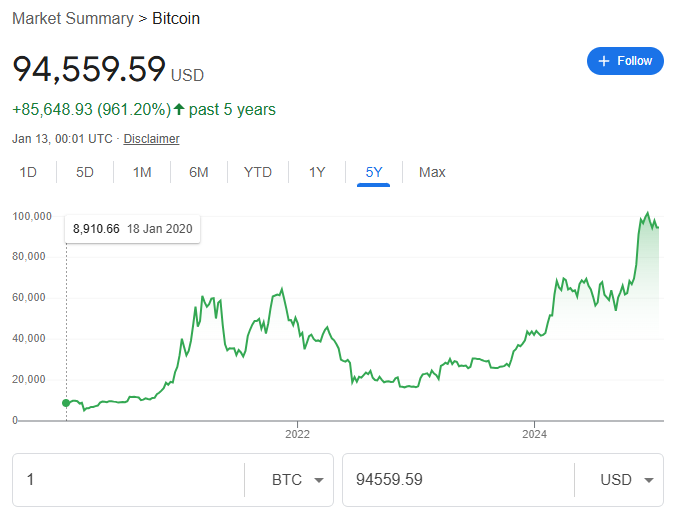
If someone told you to gamble half of your life savings in a casino, you wouldn't do it, right? That's crazy. But if they told you to "invest" in crypto, that sounds safer, so you might consider because you don't know anything about investments.
And just like that, many, many people have lost more money than they can afford to lose in something that they don't understand. They don't know anything about technology, they don't know anything about investments. They trusted someone who sounded smart because they used weird techy words like "blockchain" and "fintech" and decided to "invest" in "totallylegitcoin." Their innocence made them a victim of the scam.
Examples of People Who Lost Money in Crypto
I'd like to provide some examples to illustrate that you WILL lose your money for one reason or another. It's a casino. The house always wins. If you touch this, you'll leave it destitute, depressed, possibly suicidal, and/or a gambling addict. It will ruin your life. I can't warn you enough. You WILL regret it.
People who Lost Money Trading Crypto
‘I put my life savings in crypto’: how a generation of amateurs got hooked on high-risk trading
She started reading about cryptocurrencies online, and the more she read, the more ads for trading platforms she was served on her social media feeds. Because of Covid, Noor hadn’t spent much money over the year. So she bought £10,000 worth of the cryptocurrency bitcoin online, which turned into £18,700 within weeks. “I’d never invested before,” she tells me.
At the time we speak, Noor has lost her £10,000 initial investment, the £8,000 she made on bitcoin, and another £5,000 on top of that. Does she view this as speculation, or investing? After a pause, she finally says: “I see it as gambling.” And yet Noor still thinks she can claw her way out. “Now I think I can invest,” she says, “but I don’t know. It’s cost me a lot of money. I mean, if I can get some back, maybe I can find a good place to get out.”
She sounds desperate, at once self-aware and blindingly deluded. She sounds, in other words, like a roulette player on a losing streak.
https://www.theguardian.com/lifeandstyle/2021/jun/19/life-savings-in-crypto-generation-of-amateurs-hooked-on-high-risk-trading (accessed 2025-01-12)
Crypto crash: how a teacher’s dream investment turned into a nightmare loss
Duncan was introduced to bitcoin by a friend in the early 2010s when the value of the cryptocurrency was in the low hundred dollars. He watched as its value took off in 2017, and when it broke through $10,000, he thought: “This thing must be legit. I’ve got to start buying it.”
“I’d been having a fun life and not saving for the future … Crypto was my chance to catch up.”
The scale of Duncan’s losses was “stressful” and he is back living with his family.
He is no longer teaching and, despite his devastating losses, remains convinced that cryptocurrencies will rebound – so much so that he is pursuing a career in the industry.
https://www.theguardian.com/technology/2022/aug/29/crypto-crash-how-a-teachers-dream-investment-turned-into-a-nightmare-loss (accessed 2025-01-12)
Hawk Tuah girl has officially been sued over the collapse of her cryptocurrency that saw fans ‘lose life savings’
Fans claimed they had lost their entire life savings in less than the amount of time it takes to watch an episode of The Simpsons, as Haliey Welch and the creators behind her '$HAWK token' have been accused of coordinating a 'rug pull'.
The value of Welch's cryptocurrency plummeted from as much as $490 million to just $41 million - with some news outlets even claiming it lost more than 95 percent of its value in the one day it was released, on December 4.
https://www.unilad.com/celebrity/news/hawk-tuah-girl-crypto-lawsuit-haliey-welch-274018-20241220 (accessed 2025-01-12)
‘They couldn’t even scream any more. They were just sobbing’: the amateur investors ruined by the crypto crash
It all started in February 2021, with a radio advert for Dogecoin, a cryptocurrency promoted by Elon Musk, the founder of Tesla. Intrigued, Roy started Googling, eventually using his credit card to make an initial investment of €2,500 (£2,200) in a range of cryptocurrencies. The value of Roy’s portfolio climbed to €8,000, then €100,000, then €525,000.
Then the cryptocurrency market crashed. [...] The price of bitcoin fell from £42,000 in May 2021 to £23,000 by the end of June. [...] At the time of writing, bitcoin is hovering at £17,000. “It felt like I had lost my life,” says Roy. “Because I had invested everything in crypto. I had built every dream I had on there. So, when it came crashing down, my whole life came crashing down.”
Desperate, Roy made a string of bad bets. The value of his portfolio dwindled to €20,000, then €3,000. “It got so out of control because I saw all my chances to live a better life fading away,” he says. “So I became really desperate and eventually just completely isolated. I didn’t want to see anybody, because I thought I was a failure.”
https://www.theguardian.com/technology/2022/jul/12/they-couldnt-even-scream-any-more-they-were-just-sobbing-the-amateur-investors-ruined-by-the-crypto-crash (accessed 2025-01-12)
I may have lost my life savings to the crypto crash, and I can't believe I ever thought this was a good idea
At first I was skeptical. Cryptocurrency seemed so volatile and companies seemed so sketchy. I dismissed the idea, until my friend told me that the currency was a stablecoin, which means its value doesn't change. The coin in question, USDC, was tied to the US dollar (meaning 1 USDC was worth $1 USD), so Voyager was basically offering a very high-yield savings account.
Voyager filed for bankruptcy protection last week. And, like 3 million other crypto investors, my funds remain inaccessible. When I try to sell my USDC and withdraw my money, a message pops up that says trading is currently disabled. If it's true that the money is gone, as many fear, it means I've just lost tens of thousands of dollars I could've used to pay off my student loans.
https://www.businessinsider.com/personal-finance/lost-life-savings-voyager-bankruptcy-crypto-crash-2022-7 (accessed 2025-01-12)
People didn't know they were investing all their money in Terra. When the cryptocurrency collapsed, they lost everything — and say a Y Combinator-backed startup is to blame.
The platform, Stablegains, backed by the prestigious startup accelerator Y Combinator, advertised accounts that would hold a diversified set of cryptocurrencies pegged to the US dollar. Known as stablecoins, the digital currencies were meant to be less volatile than traditional cryptocurrencies. It also promised a 15% annual return, far higher than the national average interest rate of .07% for savings accounts.
Jonah, who wished to be identified by only his first name to preserve his privacy, said he transferred all of his life savings — $125,000 in total — to his Stablegains account. His aunt-in-law also asked him to transfer $40,000 of her savings into an account with the company.
Three weeks later, he had lost it all.
https://www.businessinsider.com/terra-luna-cryptocurrency-crash-stablegains-2022-6 (accessed 2025-01-12)
People who Lost Crypto by being Hacked
Even if you are a very lucky gambler, chances are that you're still going to lose your money anyway due to a hack or something beyond your power, and then your new crypto friends are going to tell you that it's your fault.
It's not going to be your fault, though. This technology is just terrible and unsafe for any practical purposes.
If I reviewed an application that had no undo button, I'd say it belongs in the garbage because "undo" was invented in the 70's so there is no excuse for a modern software to lack this function. In cryptocurrencies, if someone transfers your money to their account, there is no way to undo this. It's permanent and irreversible. This is just bad software.
Wardell lost his life savings after his crypto wallet was hacked
Fans were quick to point out that the 23-year-old had made a rookie mistake by not transferring his holdings to cold storage. This refers to a hardware device that stores your cryptocurrency and other digital assets offline, which helps guard against online attacks.
On the other hand, an online (or hot) wallet is connected to the internet, which makes it much more vulnerable to malicious actors. Some cryptocurrency holders choose to leave their coins on an exchange because it is easier to trade, stake, or cash out on profits, but it remains an incredibly risky move.
“I didn’t click any links or download anything. The person just unstaked everything I had and transferred it over,” Wardell said on his Twitter account dedicated to cryptocurrency.
https://www.oneesports.gg/valorant/wardell-loses-life-savings-crypto-hack/ (accessed 2025-01-12)
Coinbase customer who lost $96,000 in a crypto hack has sued the exchange after getting the brush-off
A Coinbase customer said he lost $96,000 in a phone hack — and now he's suing the US's largest cryptocurrency exchange after being told the breach was his problem.
For Bernard, a Shanghai-based investor, this seemed like a golden opportunity to invest $28,000 of his life savings. But he lost all of his money as the coin crashed over revelations that the token was not affiliated with the official IP and discrepancies were spotted in the meme coin’s whitepaper and website.
https://www.cnbctv18.com/cryptocurrency/shanghai-investor-loses-28000-life-savings-in-squid-game-crypto-scam-11334702.htm (accessed 2025-01-12)
People who Fell Victims of Cryptocurrency Scams
And this is just the best case scenario in which you trade cryptocurrency. Often people lose all their money in typical scams that just happen to occur through cryptocurrencies, e.g. by telling elders to send the scammer some money as crypto so they can liberate a payment to the victim in dollars.
'We lost our life savings in a cryptocurrency scam'
He is in his 70s and feels vulnerable and distraught about what happened.
"I wanted to do this online trading as everyone was saying how good it was, to give us a better lifestyle," he said.
Assuming he was making profits, he was drawn into a cycle of investing more in order to get money out.
The scammers said they needed 10% from him to get his money out. He said he was ill, and collapsed while on the phone and they were still on the line when paramedics arrived.
During his illness, he kept getting text messages asking for more funds. He was confused and agreed to hand over more money and eventually lost more than £250,000 in life savings.
https://www.bbc.com/news/business-57983458 (accessed 2025-01-12)
Americans lost $5.6 billion last year in cryptocurrency fraud scams, the FBI says
WASHINGTON (AP) — Americans were duped out of more than $5.6 billion last year through fraud schemes involving cryptocurrency, the FBI said in a report released Monday that shows a 45% jump in losses from 2022.
The FBI received nearly 70,000 complaints in 2023 by victims of financial fraud involving bitcoin, ether and other cryptocurrencies, according to the FBI. The most rampant scheme was investment fraud, which accounted for $3.96 billion of the losses.
“The decentralized nature of cryptocurrency, the speed of irreversible transactions, and the ability to transfer value around the world make cryptocurrency an attractive vehicle for criminals, while creating challenges to recover stolen funds,” wrote Michael Nordwall, assistant director of the FBI’s criminal investigative division.
https://apnews.com/article/cryptocurrency-fraud-fbi-report-29b412330ccebce946dec895f5060fd7 (accessed 2025-01-12)
Brooklyn artist says he lost $120,000 in a crypto scam. District attorney's office warns they're "very common."
Doug Newton just turned 86. The lifelong artist specializes in still life paintings that he sells online.
Last September, he got a message on LinkedIn from someone named Ernestine Vigil about selling his work for cryptocurrency.
"At first, I thought, great, this is easy money. Then, it all went downhill," Newton said.
https://www.cbsnews.com/newyork/news/brooklyn-cryptocurrency-nft-scam/ (accessed 2025-01-12)
Woman, 80, loses $720,000 in savings due to crypto scam 'at my age, I do not have a second chance'
One 80-year-old woman, Alice Lin, said she was suicidal after losing $720,000 in savings to a crypto scam.
"I was in shock," Lin said, " and I was thinking to kill myself."
https://www.cbsnews.com/miami/news/woman-80-loses-720000-in-savings/ (accessed 2025-01-12)
‘Mental anguish’: how a crypto scam advertised on Facebook cost victim her life savings
Jane* lost her life savings and loans worth £75,000 after falling victim to a cryptocurrency scam advertised on Facebook, which falsely claimed to be endorsed by the consumer champion Martin Lewis and left her saddled with thousands of pounds of debt.
Jane, 59, initially invested a couple of hundreds of pounds, before being manipulated into handing over more money, as the scammers created intense time pressure and said she could lose everything she had invested so far if she failed to pump more cash into the scheme.
Some of the savings were supposed to be spent on her wedding.
“I was tricked, lied to and coerced into handing over £75,000, which was my life savings plus £50,000 in loans – £20,000 of this was a loan applied for online fraudulently in my name,” she said.
https://www.theguardian.com/technology/2023/jun/16/crypto-scam-advertised-on-facebook-cost-victim-her-life-savings (accessed 2025-01-12)
Pensioner loses $224k after being tricked by AI deepfake Christopher Luxon cryptocurrency investment scam
Jill Creasy, 72, spotted the realistic-looking video advertisement on Facebook in July this year. In it, the Prime Minister purportedly urged pensioners to supplement their income by splurging on Bitcoin.
Creasy’s Bitcoin was supposed to be deposited in her Binance wallet, but she later learned it was sent to another account controlled by the scammers.
A computer expert who helped Creasy unravel the fraud tracked her Bitcoin to a third Binance “holding account” that was receiving nearly $3 million each day and contained nearly $1 billion in cryptocurrency. He believes the assets were likely linked to other victims.
https://www.nzherald.co.nz/nz/pensioner-loses-224k-after-being-tricked-by-ai-deepfake-christopher-luxon-cryptocurrency-investment-scam/YLG3EQMOAZATVARBL5ITDRL2DA/ (accessed 2025-01-12)
Life Savings of an Entire Small Town Recovered from the Depths of Crypto-Scam, Thanks to FBI
Over $8 million in children’s university funds, retirement accounts, funds for eldercare, and bequeathments to children and grandchildren were returned after the FBI located and seized a cryptocurrency wallet linked to an account in the Cayman Islands.
The bank’s founder Shan Hanes, claims he had unintentionally lost it all by investing in a sophisticated cryptocurrency scam, though he ultimately lost his defense and received 24 years in prison for defrauding depositors and investors.
https://www.goodnewsnetwork.org/life-savings-of-an-entire-small-town-recovered-from-the-depths-of-a-cryto-scam-by-fbi/ (accessed 2025-01-12)
Man lost $500,000 life savings in crypto exchange 'scam' after trader 'died with password to funds'
The 33-year-old had his life savings wiped out when a cryptocurrency exchange went disastrously wrong for him.
"It just makes me more depressed about it," he tells Sky News.
"I could have invested it in real estate. I could have put it in stocks.
"So far, nothing's been found. It sucks."
https://news.sky.com/story/man-lost-500-000-life-savings-in-crypto-exchange-scam-after-trader-died-with-password-to-funds-12577397 (accessed 2025-01-12)
Woman loses $390,000 in online crypto dating scam: "I messed up my life"
He was into investing and cryptocurrency and suggested she too could invest.
"I'm like, 'I've never invested in my life.' I don't know anything about cryptocurrency either. So I was very skeptical," she said. Hutchinson said that Hao reassured her that this was an area he knew well.
Hutchinson said Hao told her to create an account on a legitimate site [...]. Then she said he sent her a link and told her to transfer money to the new link, to what he said was a cryptocurrency exchange platform.
She started small but said she soon started investing larger amounts.
By December, their accounts showed a combined balance of $1.2 million, and Hutchinson decided it was time to cash out. That's when the site told her before she could withdraw her money, she would have to pay a hefty "tax bill" of roughly $380,000.
https://www.cbsnews.com/news/crypto-dating-scam/ (accessed 2025-01-12)
Let's say you get yourself 1 whole bitcoin and you want to cash out for real dollars. What if those dollars come from the bank account of an elderly lady who just got scammed? Could you live with that? Will your conscience allow you to buy your lambo with that nice old lady's life savings? The exchange hides this fact from you, but the dollars need to come from somewhere. With over 5 billion dollars PER YEAR being lost to cryptocurrency fraud scams, there's a very good chance that your dollars will come from one of these victims even if you didn't try to scam anybody.
You see how all of the links above I accessed in the same day? That's because all I had to do is go to Google and search for "lose crypto" and you get all these news articles. It's that common. It happens all the time. It WILL happen to you.
If you don't want to become a headline, please don't fall for this scam.
Don't Become an Example
Don't trust people who want you to join crypto. Your money will pay for their lambo.
It's a movement driven in no small part by rage, by people who looked at 2008, who looked at the system as it exists, but concluded that the problems with capitalism were that it didn't provide enough opportunities to be the boot.
And that's the pitch. Buy in now, buy in early, and you could be the high tech future boot.
Line Goes Up – The Problem With NFTs [https://www.youtube.com/watch?v=YQ_xWvX1n9g] (accessed 2025-01-12)
Just ask yourself this:
If bitcoin is so good, why would anyone sell it?
If I had something that made me lots of money without me doing anything, I would never sell it to anyone. So why are they selling it? Because they can only make money if someone else buys it.
If I had invested my money in a company that grows 10% per year, I'd get my money back in around log(110%, 200%) = 7.27 years. Why would I sell these shares when I can just do nothing, sit back, let someone else do the work with the capital I provided them, and then reap the profits like a good capitalist?
Note: if you don't know how compound interest works, it's a good idea to learn it even if you aren't interested in investing in anything.
- FM 30 1.3 Compound Interest - Future Value by Mr. MathWell [https://www.youtube.com/watch?v=mixikJ0IFno]
Beware of Investment Advice
I want to take this opportunity to also warn you that most investment advice you find on the Internet are lies. These people do not know how to make money from investments. If they knew, they wouldn't be wasting their valuable time writing articles about investing and making Youtube videos. They would instead spend that time researching more investment opportunities.
Can you imagine becoming a successful investor and spending your free time making weird faces for Youtube thumbnails?
Most of the time they just want to sell you courses, because they earn more money from selling courses than they earn from investing.
How Much Money You Can Make With Investments?
I don't like to speculate about things, so let's take a look at the facts.
Investing legend Warren Buffett is renowned for generating oversized returns. From 1965 to 2023, his company Berkshire Hathaway has delivered compounded annual gains of 19.8%, substantially outperforming the S&P 500’s 10.2% annual return during the same period.
Warren Buffett shares how he would earn a whopping 50% per year if he had less than $1 million in 2024 [https://finance.yahoo.com/news/warren-buffett-shares-earn-whopping-102900347.html] (accessed 2025-01-12)
This is one of the best investors on the planet, and he can't make more than 20% a year. Anyone promising you more than 20% per year is claiming that they are a better investor than this billionaire, but they aren't a billionaire yet for some reason.
Day Trading is Gambling and You Will Lose Your Money
I've seen someone say that if you start with $4000, and make "just" 10% per month in day trading, you will become a millionaire after 5 years. This is true. The math checks out. It's how compound interest works. BUT you still need to make 10% of profit per month, which is around 213% of profit per year. You need to buy low at $1000 and sell high at $1100 in the same month, every month, for 60 months, and the amount of money you trade, and as such the difficulty to do this, increases with every passing month.
I'm not saying that it's impossible to make a lot of money like this, I'm just saying you'll need a lot of expertise AND luck, and you're more likely to fail than to succeed. This is not investing. This is day trading. This is gambling. And we have the data to prove that you're going to fail before you even get started.
We show that it is virtually impossible for individuals to day trade for a living, contrary to what course providers claim. We observe all individuals who began to day trade between 2013 and 2015 in the Brazilian equity futures market, the third in terms of volume in the world. We find that 97% of all individuals who persisted for more than 300 days lost money. Only 1.1% earned more than the Brazilian minimum wage and only 0.5% earned more than the initial salary of a bank teller — all with great risk.
Chague, Fernando and De-Losso, Rodrigo and Giovannetti, Bruno, Day Trading for a Living? (June 11, 2020). Available at SSRN: https://ssrn.com/abstract=3423101 or http://dx.doi.org/10.2139/ssrn.3423101
Most Stocks Don't Make Money
Real investments are long term, and they are generally safer, but even that doesn't mean they really make money.
We study long-run shareholder outcomes for over 64,000 global common stocks during the January 1990 to December 2020 period. We document that the majority, 55.2% of U.S. stocks and 57.4% of non-U.S. stocks, underperform one-month U.S. Treasury bills in terms of compound returns over the full sample.
Bessembinder, Hendrik (Hank) and Chen, Te-Feng and Choi, Goeun and Wei, Kuo-Chiang (John), Long-Term Shareholder Returns: Evidence from 64,000 Global Stocks (March 6, 2023). Financial Analysts Journal, Forthcoming, Available at SSRN: https://ssrn.com/abstract=3710251 or http://dx.doi.org/10.2139/ssrn.3710251
This means that you would make more money simply buying a U.S. Treasury bill (a T-bill) than investing in most stocks.
For the record, the rate of return on a T-bill is usually higher than inflation, so buying a T-bill is a simple way to counter inflation.
Only a handful of times has inflation surpassed T-bonds.
https://www.currentmarketvaluation.com/posts/inflation-vs-interest-rates.php (accessed 2025-01-12)
Consequently, the 55% of the U.S. stocks that underperform T-bills probably also grow at a lower rate than inflation, which means you'll actually lose money (or lose buying power) if you invest in most stocks.
The Difference Between Cryptocurrencies and Real Investments
There is a minority of stocks that are actually profitable. Most of them don't make absurd amounts of money. But they are real businesses, with real products and services, and real staff. When you purchase stocks of these companies, you are becoming its owner, and that's very important to understand.
When a company wants to raise capital, it divides what it believes to be the total amount of capital needed into slices of ownership with a specific value. These slices are called shares and usually represent a percentage of ownership in a company. Commonly, but not always, these shares come with voting rights and the potential to receive a portion of the company's profits through dividends or capital appreciation. The shares issued by the company to shareholders are called outstanding shares because investors, not the corporation, hold them.
https://www.investopedia.com/articles/investing/082614/how-stock-market-works.asp (accessed 2025-01-13)
As we have seen from the examples above, many people who are new to crypto are also new to the world of investments in general. They have never invested. They don't know how it works. And, in some cases, they actually believe that investments are gambling because all they know is the whole "buy low sell high" scheme that stems from day trading and cryptocurrency exchanges.
They believe that investments are a zero-sum game where one can only gain money by having someone else lose money. That's not what investing is or should be. And I have the word of the Pope by my side on this.
What is morally unacceptable is not simply to profit, but rather to avail oneself of an inequality for one’s own advantage, in order to create enormous profits that are damaging to others; or to exploit one’s dominant position in order to profit by unjustly disadvantaging others, or to make oneself rich through harming and disrupting the collective common good.[33]
Such a practice is particularly deplorable from the moral point of view when the intention of profit by a few through the risk of speculation even in important funds of investment,[34] provokes artificial reduction of the prices of public debt securities, without regard to the negative impact or to the worsening of the economic situation of entire nations. This practice endangers not only the public efforts for rebalancing, but also the very economic stability of millions of families, and at the same time compels government authorities to intervene with substantial amounts of public money, even to the extent of artificially interfering in the proper functioning of political systems.
[33] Cf. Pius XI, Encyclical Letter Quadragesimo anno, 132: AAS 23 (1931), 219; Paul VI, Encyclical Letter
Populorum progressio, 24: AAS 59 (1967), 269.
[34] Cf. Catechism of the Catholic Church, 2409.
https://press.vatican.va/content/salastampa/en/bollettino/pubblico/2018/05/17/180517a.html (accessed 2025-01-12)
In a real investment, there's a business that actually makes money, and if they had more money NOW they would be able to make EVEN MORE MONEY! It's a money-making machine that uses money as its fuel. The "investment" is YOU giving them the money they need at this instant. In return, you get to literally own a part of the business proportional to your investment.
If a business makes 100K in profit per year, they will get that 100K if they wait one year. Maybe they could use that 100K to expand their operations. But if you gave them 100K now, they would be able to expand NOW instead of having to wait a whole year for it. The enterprise will turn this capital into more profit the moment they get it.
Nobody "loses" with this. There are no losers. You haven't harmed anybody by investing. You merely accelerated the natural outcome of the profitable enterprise.
They needed the money to work, and you provided them with the money to realize their project. It's like a loan, but a bit different. They don't HAVE to pay you back if they fail—their failure is your failure as well, because now you're on the same boat—while, on the other hand, if they have great success, you'll earn a lot more money than you would have earned if you had simply loaned them money.
It's win-win scenario. It's not a zero sum game.
Liquidity and Intrinsic Value
If a company has 2 buildings, and you owned 50% of the company, you own one whole building. That's because it was your money, the capital that you provided, that the company used to buy that building. Even if this company's industry becomes obsolete tomorrow, the building it has purchased won't disappear. It's a tangible asset that can be sold. Thus, the value of the company can't really go to zero so long as it doesn't have any debts because the physical objects it has purchased can not just disappear.
When you liquidate a company, its assets are used to pay off its debts. Any money left goes to shareholders.
https://www.gov.uk/liquidate-your-company (accessed 2025-01-13)
I hope this helped you understand why real investments are completely different from crypto, as in crypto there is nothing backing the value of a coin.
It's like if you paid 100 dollars for a pebble and you said it's worth 100 dollars because that's how much you paid for it. It's a pebble. It's not worth anything. If you paid 100 dollars for it, I don't know what to tell you. It's not "worth" 100 dollars just because that's how much money you lost acquiring it. It's a pebble. I can get a pebble off the ground for free that's functionally the same as your pebble. Why would I or anyone else pay 100 dollars for it? That doesn't make any sense.
The "Going to the Moon" Scam
Some people buy a random coin nobody has ever head about with no use whatsoever thinking that will be worth millions one day if they just hold it for long enough. I'm sorry, but this is absolute insanity with no basis on reality. The value of that coin won't "go to the moon." You just lost your money.
Usually, what happens is this:
1: the "value" of a cryptocurrency according to an exchange is determined by the value of its last transaction, or by some average of the last few transactions. So if someone buys a pebblecoin for 100 dollars, its "value" becomes 100 dollars because that's what someone paid for.
2: a scammer uses two accounts in an exchange, one account full of pebblecoins that he sells, and one full of dollars he uses to buy pebblecoins. He is literally sending money to himself (minus the exchange's fees). The exchange registers his purchases as transactions, so whatever he pays for his own pebblecoins becomes the "value" of the pebblecoin. He could slowly buy his own pebblecoins for more and more dollars, $110, $120, $150, until it's "worth" $10K.
3: a victim of the scam buys the pebblecoin for $10K thinking that's the market rate for it, not knowing the market is all made up. After they buy the pebblecoin, they will be unable to sell it, because the only people who had pebblecoins were the scammers, and nobody else cares about pebblecoins.
The cryptocurrency fandom calls this a "rug pull," but don't let them distract you. There is no use for pebblecoins. What else would they think was going to happen?
In a regulated market, i.e. stock markets, this practice is called wash trading, and it's illegal.
Wash trading is a process whereby a trader buys and sells a security for the express purpose of feeding misleading information to the market. [...]
Wash trading misleads investors into believing that trading volumes for a security are higher than they actually are, potentially increasing legitimate trading activity on the security in the process. Wash trading is illegal under U.S. law [...].
https://www.investopedia.com/terms/w/washtrading.asp (accessed 2025-01-13)
In cryptocurrencies, this practice happens all the time. The scammers participating in cryptocurrency scams know how to use the technology to scam people. They use software that you don't have to automate their schemes in ways that you can't detect. The experts at the FBI can figure this out. You can not. They will lie to you, and you will lose your money.
Observation: no cryptocurrency provides a method for actually exchanging it for real money. In principle, it would be like having an account on an online game like Counter Strike or League of Legends that is full of in-game items, and trying to sell it. That isn't supported by the game developer, and probably not even allowed by the terms of service of the game, so you would have to contact a buyer in some non-supported way, get the money, honor the purchase by transferring the account to them (e.g. by giving them your username and password), all manually. In crypto, this would be like meeting someone in a dark alley to buy bitcoin, give them some dollars, and cross your fingers that they actually send you the bitcoin you paid for. That's what "decentralized finance" means. There is no centralized authority supervising that you are doing the thing you said you would do. In practice, this would be unusable, so to deal with cryptocurrencies you must deal with a centralized private entity called an exchange that takes your money and lets you buy cryptocurrencies like a casino that gives you chips when you give them dollars and lets you redeem the chips for dollars later. If you live somewhere where cryptocurrencies are illegal, you probably can't cash out at all because the exchanges won't be allowed to operate in that jurisdiction so the only way to get your money out would be to find a crypto dealer in a dark alley somewhere. It also means that the "value" of cryptocurrencies are determined not by decentralized systems, but entirely by these private entities called exchanges that have access to the information of how much one person paid for what.
How to Make Money If You Don't Have Any
The easiest way to make money if you need money is to get a job that pays money. It's not to invest in crypto, nor is it to invest in stocks. It's just to get a good-paying job.
In fact, the best investment that you can make is to invest in yourself. Buy yourself some time to find a better paying job.
Did you know that in some places a garbage man makes six figures?
"Your trash is my money," Molina, 32, says with a baby-faced grin.
Molina made $112,000 last year as a garbage truck driver and Sankar made $100,000 as a helper, riding on the back of the truck. [...]
Molina dropped out of high school in the 10th grade and he's worked at Crown for 10 years. He says his starting salary was about $80,000. [...]
https://www.cbsnews.com/philadelphia/news/looking-to-make-6-figures-the-stinky-job-that-will-also-have-you-smelling-money/ (2025-01-12)
Take a look at what jobs are available in your area, even if it isn't a job that you would normally do. You never know what opportunities you may find.
In some cases, but not always, finding another company hiring for the same job you are doing right now may make you more money than staying in your current job and waiting for a raise.
When salaries don’t keep up with inflation, anxious employees tend to hunt for higher-paying jobs. And it’s paying off. Job-hopping beat inflation for 49% of job hoppers in 2022, based on a new Federal Reserve Bank of Atlanta report. Among those who remained with their employer, only 42% got inflation-beating raises. With 40-year high inflation rates and a skyrocketing cost of living, it’s no wonder more employees are open to changing jobs.
Why Job Hopping Is Going To Continue For The Foreseeable Future [https://www.forbes.com/sites/carolinecastrillon/2023/09/03/why-job-hopping-is-going-to-continue-for-the-foreseeable-future/] (accessed 2025-01-13)
I'm not a financial advisor, so I don't think it's my place to tell other people what to do to make money. The only thing I'm good at is Googling things. If you need financial advice, all I can offer you is some articles I found.
- The Best Financial Advice for Young Adults [https://time.com/6957579/best-financial-advice-young-adults/] (accessed 2025-01-13)
- The Basics of Personal Finance [https://www.ramseysolutions.com/budgeting/the-basics-of-personal-finance#cookie-banner] (accessed 2025-01-13)
- How to Set Financial Goals for Your Future [https://www.investopedia.com/articles/personal-finance/100516/setting-financial-goals/] (accessed 2025-01-13)
In general, the advice is the same:
- Make a budget. Know how much you make.
- Spend less than you make.
- Plan ahead. Many people don't make any sort of plan about anything.
- Don't get in debt.
Debt is the opposite of an investment. Just like investments accrue compound interest, debts also do, but in the negative. You may have heard horror stories about Americans who got student loans, paid the minimum monthly amount for DECADES, and they still owe just as much as they started. That's because the minimum amount you can pay is paying just the interest. If you pay just the interest, the amount of debt never changes.
Some credit cards have a 16% interest rate (or APR, annual percentage rate). Warren Buffet can't make more than 20% per year, but the credit card company will take 16% from you per year just because you owe them. Conversely, this means that getting rid of a 16% APR debt is mathematically equivalent to finding some investment that grows 16% per year. Paying off your debts is the easiest investment you can make.
I've read some experts say it's a better idea to save for an emergency fund before paying off your debts, but I think it depends. Emergencies can happen, and if they do happen and you have no money you'll get into more debt. But the debt you have today is constant. Emergency funds may make sense compared to low-interest debts, but high-interest debts should be paid as soon as possible. They'll make you bleed money.
Finally, and this is my personal opinion, avoid installments if you can. Installments are traps. I've met people who think it's a better idea to buy something and pay for it for 12 months instead of just paying the whole thing up front because then they will have more money in the bank. That's not how it works. The money you have in the bank is the money that will need to use to pay the installments later. If you don't have enough money to pay all the installments, you are effectively in debt, you just don't know it yet. Installments complicate things. They make it not obvious how much money you actually have.
Here in Brazil we have a property tax called the IPTU that it's one value if you pay it every month, but it has a discount if you pay the whole thing at the start of the year. This is an opportunity to save money that you only have if you have money in the bank. If you are paying installments of multiple things until you don't have anything left from your monthly income, you won't have money to participate in opportunities like these. If you live paycheck to paycheck, you'll miss these chances. It's like the system is made to keep the poor poor.
It's very easy to make bad decisions, be it in personal finance or technology, when you don't know anything about personal finance or technology. Learning these things, acquiring knowledge about how things work, is another great investment you can make.
Closing Remarks
Please don't fall for the crypto scam. I don't want you to lose your money with this "technology."
As a computer guy, I feel cryptocurrencies are part of my industry, and I feel a deep sense of shame by it. It makes my stomach turn when I think that I belong to the same industry as these guys.
It has ruined so many people's lives—people whose lives should have been improved by the technologies that we create—that I feel nothing but disappointment about it. Every time I hear about cryptocurrencies it just makes me angry. There are so many better technologies, and this is all people talk about. And it's no mystery why. Did you know that many of the Internet's most visited websites are gambling websites?
People are just addicted to gambling these days. Even though they know most people will lose money in it, they can't help but dream of a better life from a stroke of pure luck. That makes them vulnerable to scams. I would NEVER trust a slot machine because I know how programs work. If they wanted to scam you, it takes one line of code.
I have seen many government and university websites that used WordPress and got hacked, and you know what the hacker did with the site? They just made the site redirect visitors to gambling websites. And this didn't happen only one time. I found SEVERAL websites like this, and EVERY SINGLE TIME it was a gambling website. I don't trust this online gambling industry. I don't know if they are the hackers, I don't know if they just have an affiliate program that is exploited by hackers, all I know is that every time it happens it's a gambling website, and everywhere you see gambling ads you also find cryptocurrency ads. It's all connected. And I don't like it.
These people were blessed with an intelligence and knack for technology that many don't have or wish they had, and THIS is what they chose to do with it.
This isn't what I signed up for when I became a nerd.
Please stay away from it.