What is Flash Memory?
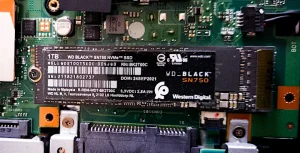
Flash memory is a type of non-volatile memory used in SSDs and thumb drives, meaning that it's capable of being a mass storage medium where files can be saved to "permanently."



How Does Flash Memory Work?
Disclaimer: I'm not an expert in electronics so take my understanding with a grain of salt.
Flash memory records data by trapping electrons inside its memory cells using the oxide layer of a MOSFET (Metal Oxide Semiconductor Field Effect Transistor). The trapped electrons stay trapped due to chemical forces even when there is no electrical current (no voltage to move them). The trapped electrons can be used to create a difference in potential (a voltage) between two points. The electronic device can then use this voltage as an indicator of data. For example, if there is voltage from a transistor (if there are electrons trapped), that could mean the bit 1, otherwise, if there is no voltage (no electrons trapped), it could mean the bit 0. With 8 trillion of these transistors we would have 1 terabyte of data.
When a NAND cell is being programmed, an electrical current reaches the control gate and electrons flow onto the floating gate, creating a net positive charge that interrupts current flow. The oxide layer keeps the floating gate isolated so that any electrons on the floating gate are kept there, along with the data being stored. This is what gives flash memory the ability to both hold an electrical charge and retain data.
https://www.ibm.com/think/topics/flash-memory (accessed 2025-01-18)